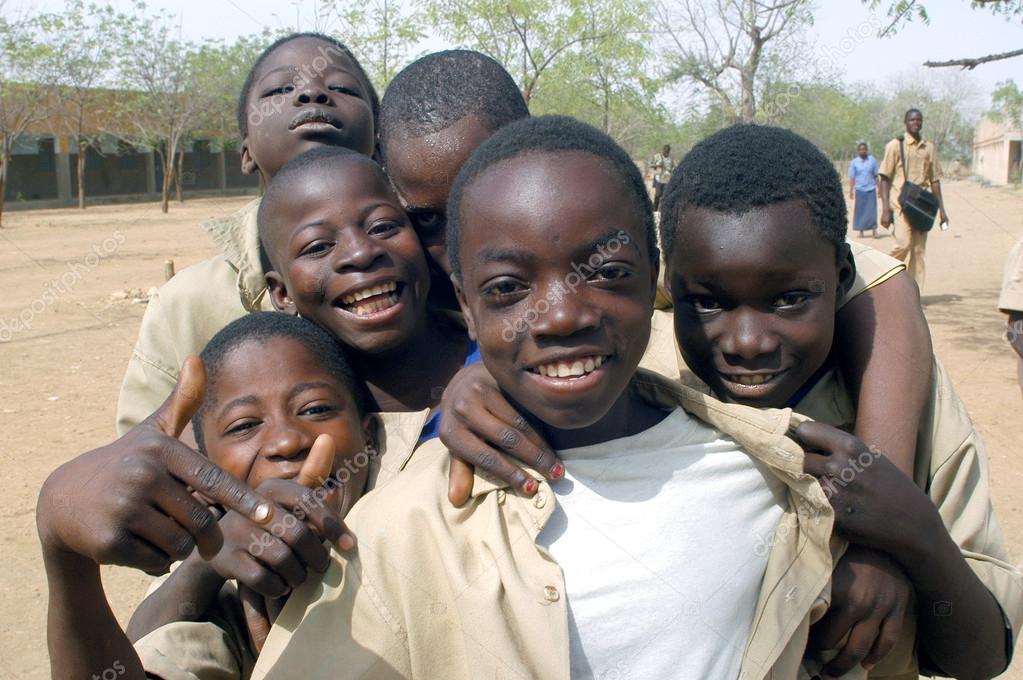
Because of You…
Young people in Burkina Faso are being reached with the Good News of Jesus Christ through such ministries as clubs, rallies, film and radio evangelism, and clinics.
Burkina Faso YFC is in the process of constructing a center for leadership formation as well as a welcome center, and also a chapel for the 2000 students participating in the YFC school and others.
Prayer Needs
- Increase in the financial base to facilitate the on-going work of the ministry
- The extension of ministry into additional towns and cities
- Peace in the country
- Strengthening the network among Christians in the nation
- That the Lord to use Generation 21 to fulfill His glory in Burkina Faso
- Implementation of a YFC music team
- Radio equipment
About Burkina Faso
Burkina Faso

Introduction
Burkina Faso (formerly Upper Volta) achieved independence from France in 1960. Repeated military coups during the 1970s and 1980s were followed by multiparty elections in the early 1990s. Current President Blaise COMPAORE came to power in a 1987 military coup and has won every election since then. Burkina Faso's high population density and limited natural resources result in poor economic prospects for the majority of its citizens. Recent unrest in Cote d'Ivoire and northern Ghana has hindered the ability of several hundred thousand seasonal Burkinabe farm workers to find employment in neighboring countries.
Geography
Location
Location: Western Africa, north of Ghana
Geographic Coordinates: 13 00 N, 2 00 W
Area
Total Area: 274,200 sq km Rank: 74
Land Area: 273,800 sq km
Water Area: 400 sq km
Comparison: slightly larger than Colorado
Land Boundaries: 3,193 km
Bordering Countries: Benin 306 km, Cote d'Ivoire 584 km, Ghana 549 km, Mali 1,000 km, Niger 628 km, Togo 126 km
Coastline: 0 km (landlocked)
Climate
tropical; warm, dry winters; hot, wet summers
Terrain
mostly flat to dissected, undulating plains; hills in west and southeast
Elevations
Lowest Point: Mouhoun (Black Volta) River 200 m
Highest Point: Tena Kourou 749 m
Natural Resources
manganese, limestone, marble; small deposits of gold, phosphates, pumice, salt
Land Use
Arable land: 17.66%
Permanent Crops: 0.22%
Other: 82.12% (2005)
Irrigated Land: 250 sq km (2003)
Renewable Water Resources: 17.5 cu km (2001)
Total Freshwater withdrawal (domestic/industrial/agricultural): 0.8 cu km/yr (13%/1%/86%)
Freshwater Withdrawal Per Capita: 60 cu m/yr (2000)
Environment
Natural Hazards: recurring droughts
Environmental Issues: recent droughts and desertification severely affecting agricultural activities, population distribution, and the economy; overgrazing; soil degradation; deforestation
Environmental Agreements: Party to: Biodiversity, Climate Change, Climate Change-Kyoto Protocol, Desertification, Endangered Species, Hazardous Wastes, Law of the Sea, Marine Life Conservation, Ozone Layer Protection, Wetlands
Geography Notes
landlocked savanna cut by the three principal rivers of the Black, Red, and White Voltas
People
Population: 15,746,232 Rank: 61
Note: estimates for this country explicitly take into account the effects of excess mortality due to AIDS; this can result in lower life expectancy, higher infant mortality, higher death rates, lower population growth rates, and changes in the distribution of population by age and sex than would otherwise be expected (July 2010 est.)
Age Structure
0-14 years: 46.2% (male 3,646,661/female 3,621,648)
15-64 years: 51.3% (male 4,025,917/female 4,054,865)
65 years and over: 2.5% (male 156,895/female 240,246) (2010 est.)
Median Age: 16.6 years
Population Growth
Growth Rate: 3.103% (2010 est.) Rank: 10
Birth Rate: 44.33 births/1,000 population (2010 est.) Rank: 4
Death Rate: 13.3 deaths/1,000 population (July 2010 est.) Rank: 25
Net Migration Rate: NA
Urbanization
Urban Population: 20% of total population (2008)
Rate of Urbanization: 5% annual rate of change (2005-10 est.)
Life and Death
Infant Mortality Rate: 84.49 deaths/1,000 live births Rank: 13
Life Expectancy at Birth: 52.95 years Rank: 203
Fertility Rate: 6.21 children born/woman (2010 est.) Rank: 6
Health and Disease
HIV/AIDS - Adult Prevalence Rate: 1.6% (2007 est.) Rank: 38
People living with HIV/AIDS: 130,000 (2007 est.) Rank: 40
HIV/AIDS Deaths: 9,200 (2007 est.) Rank: 34
Degree of Risk for Major Infectious Diseases: very high
Food or waterborne diseases: bacterial and protozoal diarrhea, hepatitis A, and typhoid fever
Vectorborne disease: malaria and yellow fever
Water Contact Diseases: schistosomiasis
Respiratory Disease: meningococcal meningitis
Animal Contact Diseases: rabies
Note: highly pathogenic H5N1 avian influenza has been identified in this country; it poses a negligible risk with extremely rare cases possible among US citizens who have close contact with birds (2009)
Nationality and Culture
Noun: Burkinabe (singular and plural)
Adjective: Burkinabe
Ethnic Groups: Mossi over 40%, other approximately 60% (includes Gurunsi, Senufo, Lobi, Bobo, Mande, and Fulani)
Religion: Muslim 50%, indigenous beliefs 40%, Christian (mainly Roman Catholic) 10%
Languages: French (official), native African languages belonging to Sudanic family spoken by 90% of the population
Education
Literacy (Meaning, age 15 and over can read and write): 21.8% Male: 29.4% Female: 15.2% (2003 est.)
School life expectancy (primary to tertiary education): 5 years Male: 5 years Female: 4 years (2006)
Education expenditures: 4.2% of GDP (2006) Rank: 96
Government
Country Name
Conventional Long Form: none
Conventional Short Form: Burkina Faso
Local Long Form: none
Local Short Form: Burkina Faso
Formerly: Upper Volta, Republic of Upper Volta
Government Type: parliamentary republic
Capital: Ouagadougou Geographic Coordinates: 12 22 N, 1 31 W
Administrative divisions
45 provinces; Bale, Bam, Banwa, Bazega, Bougouriba, Boulgou, Boulkiemde, Comoe, Ganzourgou, Gnagna, Gourma, Houet, Ioba, Kadiogo, Kenedougou, Komondjari, Kompienga, Kossi, Koulpelogo, Kouritenga, Kourweogo, Leraba, Loroum, Mouhoun, Nahouri, Namentenga, Nayala, Noumbiel, Oubritenga, Oudalan, Passore, Poni, Sanguie, Sanmatenga, Seno, Sissili, Soum, Sourou, Tapoa, Tuy, Yagha, Yatenga, Ziro, Zondoma, Zoundweogo
Independence: 5 August 1960 (from France)
National holiday: Republic Day, 11 December (1958)
Constitution: approved by referendum 2 June 1991; formally adopted 11 June 1991; last amended January 2002
Legal system: based on French civil law system and customary law; has not accepted compulsory ICJ jurisdiction
Suffrage: 18 years of age; universal
Executive Branch
Chief of State: President Blaise COMPAORE (since 15 October 1987)
Head of Government: Prime Minister Tertius ZONGO (since 4 June 2007)
Cabinet: Council of Ministers appointed by the president on the recommendation of the prime minister
Elections: president elected by popular vote for a five-year term (eligible for a second term); election last held on 13 November 2005 (next to be held on 21 November 2010); in April 2000, the constitution was amended reducing the presidential term from seven to five years, enforceable as of 2005; prime minister appointed by the president with the consent of the legislature
Election Results: Blaise COMPAORE reelected president; percent of popular vote - Blaise COMPAORE 80.3%, Benewende Stanislas SANKARA 4.9%
Legislative Branch
unicameral National Assembly or Assemblee Nationale (111 seats; members are elected by popular vote to serve five-year terms)
Elections: National Assembly election last held on 6 May 2007 (next to be held in May 2012)
Election Results: percent of vote by party - NA; seats by party - CDP 73, ADF-RDA 14, UPR 5, UNIR-MS 4, CFD-B 3, UPS 2, PDP-PS 2, RDB 2, PDS 2, PAREN 1, PAI 1, RPC 1, UDPS 1
Judicial branch
Supreme Court; Appeals Court
Politics
Political Parties and Leaders: African Democratic Rally-Alliance for Democracy and Federation or ADF-RDA [Gilbert OUEDRAOGO]; Citizen's Popular Rally or RPC [Antoine QUARE]; Coalition of Democratic Forces of Burkina or CFD-B [Amadou Diemdioda DICKO]; Congress for Democracy and Progress or CDP [Roch Marc-Christian KABORE]; Democratic and Popular Rally or RDP [Nana THIBAUT]; Movement for Tolerance and Progress or MTP [Nayabtigungou Congo KABORE]; Party for African Independence or PAI [Soumane TOURE]; Party for Democracy and Progress-Socialist Party or PDP-PS [Ali LANKOANDE]; Party for Democracy and Socialism or PDS [Felix SOUBEIGA]; Party for National Rebirth or PAREN [Jeanne TRAORE]; Rally for the Development of Burkina or RDB [Antoine KARGOUGOU]; Rally of Ecologists of Burkina Faso or RDEB [Ram OUEDRAGO]; Republican Party for Integration and Solidarity or PARIS; Union for Democracy and Social Progress or UDPS [Fidele HIEN]; Union for Rebirth - Sankarist Movement or UNIR-MS [Benewende STANISLAS]; Union for the Republic or UPR [Toussaint Abel COULIBALY]; Union of Sankarist Parties or UPS [Ernest Nongma OUEDRAOGO]
Political pressure groups and leaders: Burkinabe General Confederation of Labor or CGTB [Tole SAGNON]; Burkinabe Movement for Human Rights or MBDHP [Chrysigone ZOUGMORE]; Group of 14 February [Benewende STANISLAS]; National Confederation of Burkinabe Workers or CNTB [Laurent OUEDRAOGO]; National Organization of Free Unions or ONSL [Paul KABORE]
Other: watchdog/political action groups throughout the country in both organizations and communities
International Organization Participation: ACCT, ACP, AfDB, AU, ECOWAS, Entente, FAO, FZ, G-77, IAEA, IBRD, ICAO, ICC, ICCt, ICRM, IDA, IDB, IFAD, IFC, IFRCS, ILO, IMF, Interpol, IOC, IOM, IPU, ISO (correspondent), ITSO, ITU, ITUC, MIGA, MONUC, NAM, OIC, OIF, OPCW, PCA, UN, UNCTAD, UNESCO, UNIDO, UNITAR, UNMIS, UNOCI, UNWTO, UPU, WADB (regional), WAEMU, WCO, WFTU, WHO, WIPO, WMO, WTO
Flag Description: two equal horizontal bands of red (top) and green with a yellow five-pointed star in the center; red recalls the country's struggle for independence, green is for hope and abundance,and yellow represents the country's mineral wealth
Note: uses the popular Pan-African colors of Ethiopia
Economy
Economy Overview: One of the poorest countries in the world, landlocked Burkina Faso has few natural resources and a weak industrial base. About 90% of the population is engaged in subsistence agriculture, which is vulnerable to periodic drought. Cotton is the main cash crop and the government has joined with three other cotton producing countries in the region - Mali, Niger, and Chad - to lobby in the World Trade Organization for fewer subsidies to producers in other competing countries. Since 1998, Burkina Faso has embarked upon a gradual but successful privatization of state-owned enterprises. Having revised its investment code in 2004, Burkina Faso hopes to attract foreign investors. Thanks to this new code and other legislation favoring the mining sector, the country has seen an upswing in gold exploration and production. While the bitter internal crisis in neighboring Cote d'Ivoire is beginning to be resolved, it is still having a negative effect on Burkina Faso's trade and employment. Burkina Faso received a Millennium Challenge Corporation (MCC) threshold grant to improve girls' education at the primary school level, and signed an MCC compact that focuses on the areas of infrastructure, agriculture, and land reform in July 2008.
Gross Domestic Product
GDP (purchasing power parity): $18.81 billion (2009 est.) Rank: 126
GDP - real growth rate: 3.2% (2009 est.) Rank: 58
GDP - per capita (PPP): $1,200 (2009 est.) Rank: 204
GDP - Composition by Sector: Agriculture: 30.1% Industry: 20.7% Services: 49.2% (2009 est.)
Labor Force
Labor Force: 6.668 million Rank: 63
Note: a large part of the male labor force migrates annually to neighboring countries for seasonal employment (2007)
Unemployment Rate: 77% (2004) Rank: 196
Poverty
Population below poverty line: 46.4% (2004)
Transnational Issues
Disputes - international: in September 2007, Economic Community of West African States (ECOWAS) intervened to attempt to resolve the dispute over two villages along the Benin-Burkina Faso border that remain from a 2005 ICJ decision; in recent years citizens and rogue security forces rob and harass local populations on both sides of the poorly defined Burkina Faso-Niger border; despite the presence of more than 9,000 UN forces (UNOCI) in Cote d'Ivoire since 2004, ethnic conflict continues to spread into neighboring states that can no longer send their migrant workers to work in Ivorian cocoa plantations

